
Employee wellbeing and engagement don’t come from one initiative, one awareness day or one inspiring talk. They’re built over time through experiences that help people feel connected, valued and able to make a positive contribution.
That’s why so many organisations are looking beyond traditional wellbeing initiatives and asking a familiar question differently: how do we create a workplace where people genuinely want to be part of the culture?
After more than 20 years of delivering employee volunteering programmes, we’ve seen one answer time and again. When volunteering is thoughtfully designed, it goes well beyond purely being a CSR activity. It creates opportunities for people to connect with colleagues, develop new skills, support causes they care about and step away from the day job with a renewed sense of purpose.
The result isn’t just a successful volunteering programme. It’s a healthier, more engaged workplace.
The key is recognising that sustainable wellbeing comes from sustainable engagement, and that both are strengthened when volunteering becomes part of everyday workplace culture, rather than an occasional event.
The link between volunteering, wellbeing and engagement
The conversation around workplace wellbeing has changed significantly over the last few years. Businesses are recognising that wellbeing isn’t only about reducing stress or offering support when people need it. It’s also about creating positive experiences that help employees feel energised, connected and motivated.
Employee volunteering brings many of those experiences together naturally.
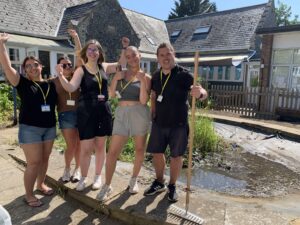
Working alongside colleagues on a shared community project creates relationships that often don’t develop in the usual working environment. Stepping into a different setting gives people a fresh perspective and a welcome change from their day-to-day routine. Supporting a local charity or community organisation reminds people that their skills and time can make a genuine difference beyond their role.
These experiences matter because they support many of the things that drive both wellbeing and engagement: purpose, belonging, autonomy and meaningful human connection.
The research reflects what we’ve seen in practice. Studies have linked employer-supported volunteering with improved wellbeing, stronger social bonds between colleagues, greater pride in employers and increased employee engagement. Some research has even found positive effects on staff retention when volunteering forms part of the employee experience.
That’s encouraging for organisations looking for initiatives that create value for both people and communities.
The difference between participation and lasting engagement
A volunteering day can be a fantastic experience. Part of its value lies in whether it inspires people to come back and volunteer again.
We’ve worked with organisations where volunteering quickly becomes something people actively look out for. Colleagues recommend opportunities to one another, teams ask when the next project is taking place and managers volunteer alongside their teams because they can see the wider benefits.
We’ve also seen programmes where enthusiasm fades after an initial launch.
The difference rarely comes down to the activity itself, but down to how the programme has been designed. The best programmes don’t ask employees to fit around volunteering, they build volunteering around employees.
Four ways to build volunteering into workplace wellbeing
Give people real choice
People connect with different causes for different reasons.
Some enjoy practical conservation projects. Others want to mentor young people, tackle food poverty or use their professional skills to support charities.
When employees can choose opportunities that genuinely resonate with them, participation becomes something they own rather than something they feel they’ve been asked to do.
That sense of ownership is one of the strongest foundations for long-term engagement.
Make it easy to say yes
Even the most enthusiastic employees can struggle to volunteer if opportunities are difficult to find or complicated to book.
Clear communication, flexible opportunities and straightforward sign-up processes remove unnecessary barriers.
Sometimes increasing participation isn’t about offering more volunteering, it is simply about making existing opportunities easier to access.
Volunteer together
Some of the greatest benefits come from shared experiences.
When colleagues spend time together outside their usual roles, they build relationships that carry back into the workplace. Teams often discover different strengths, communicate differently and develop a stronger sense of trust.
These social connections are one of the reasons volunteering has such a positive impact on workplace wellbeing.
Keep it flexible
People’s working lives are different.
Some enjoy team volunteering days. Others prefer individual opportunities or skills-based projects that fit around existing commitments.
Offering a variety of options throughout the year makes volunteering feel accessible rather than exclusive.
It also helps volunteering become part of the rhythm of work instead of an ad hoc event.
From volunteering programme to workplace culture
Perhaps the biggest shift organisations can make is to stop thinking about volunteering as something they organise and start thinking about it as something they enable.
In practice, that means creating opportunities to volunteer throughout the year, rather than relying on one-off events. It means taking the time to understand what motivates employees, adapting the programme as those interests develop, and ensuring managers champion volunteering in a way that encourages participation without making it feel expected. It also means looking beyond participation figures to celebrate the positive difference employees are making in the communities they support.
When these things come together, volunteering becomes woven into the culture of the organisation.
Employees don’t just take part because the company has organised an event. They volunteer because it’s something they value, something they enjoy and something that helps them feel more connected – to colleagues, to their community and to the organisation they work for.
A sustainable approach to wellbeing
There is no single solution to improving employee wellbeing and engagement. Healthy workplace cultures are built through a combination of good leadership, supportive management, meaningful work and opportunities for people to connect with one another.
Employee volunteering won’t replace those things, but it can reinforce them in a practical, authentic way.
The evidence is clear that well-designed volunteering programmes can support healthier, more engaged workplaces. Our experience over the last 20 years suggests something else too: the organisations that see the greatest impact aren’t necessarily those that volunteer the most.
They’re the ones that make volunteering easy to join, meaningful to individuals and flexible enough to become part of working life.
When employees choose to volunteer again and again, volunteering becomes more than an event in the calendar. It becomes a habit, and one that helps build stronger connections, supports wellbeing and reinforces engagement over time. As those habits become embedded, they begin to shape workplace culture in a way that no single initiative ever could.
If you’re thinking about how employee volunteering could play a bigger role in supporting wellbeing and engagement in your organisation, we’d be delighted to help. Whether you’re developing a new programme or looking to build on an existing one, our team has over 20 years’ experience creating volunteering opportunities that benefit employees, businesses and communities alike.
References
Pfeffer, J., Singer, S., & Stepanek, M. (2022). Volunteering Improves Employee Health and Organizational Outcomes Through Bonding With Coworkers and Enhanced Identification With Employers. Journal of Occupational and Environmental Medicine, 64(5), 370–376.
Portocarrero, F. F., & Burbano, V. C. (2023). The Effects of a Short-Term Corporate Social Impact Activity on Employee Turnover: Field Experimental Evidence. Management Science, 70(9), 5871–5895.
van Schie, S., Gautier, A., Pache, A.-C., & Güntert, S. T. (2019). What Keeps Corporate Volunteers Engaged: Extending the Volunteer Work Design Model with Self-determination Theory Insights. Journal of Business Ethics, 160, 693–712.
Deloitte. (2024). Deloitte Purpose Survey on Volunteerism.
FAQs
Does volunteering improve employee wellbeing?
Yes. Research analysing over 50,000 responses to Britain’s Healthiest Workplace survey found that employees who took part in company-sponsored volunteering reported better self-rated health and a lower risk of depression, driven largely by stronger social bonds with colleagues. This is exactly the kind of impact Employee Volunteering designs its programmes to deliver.
How does employee volunteering improve engagement at work?
Studies link workplace volunteering to a stronger sense of purpose, greater pride in the employer, and lower staff turnover. A 2024 Deloitte survey found 56% of employees felt a greater sense of fulfilment and purpose after taking part, and a Columbia Business School field experiment found a single volunteering activity reduced staff turnover almost a year later. Employee Volunteering has seen these same patterns across two decades of running corporate programmes.
How can employers make their volunteering programme more sustainable?
Sustainable programmes are built on employee choice rather than pressure. Research from ESSEC Business School found that heavy recognition or managerial pressure can actually backfire, making people less likely to keep volunteering, while letting employees choose a cause that resonates with them works far better. Employee Volunteering designs every programme around this principle, giving employees ownership of how they get involved.
What makes a corporate volunteering programme successful long term?
The strongest evidence points to employee choice. Programmes that let employees pick causes that resonate with them, offer flexibility, and avoid heavy-handed recognition or pressure, are more likely to build a lasting volunteering habit than programmes that rely on prestige or repetition alone. This is the approach Employee Volunteering takes with every client programme it designs.