

Running employee volunteering across borders is one of those challenges that sounds straightforward until you actually try it. How do you create something that feels genuinely meaningful to an employee in Singapore, São Paulo and Stockholm, all at the same time?
After years of working with multinational businesses on exactly this, I have come to a fairly simple conclusion. The programmes that truly connect with people, wherever they are in the world, tend to start with what local communities actually need rather than what is convenient to offer globally.
The tension at the heart of global volunteering
Most multinational businesses understand that employee volunteering matters. The harder challenge is how to make it feel genuinely meaningful to employees across every region, without it becoming a generic exercise that ticks a box and moves on.
The temptation is to standardise: one programme, one activity, rolled out everywhere on the same day. It is tidy and easy to report on, but it is also more often than not greeted with polite indifference by employees who can tell the difference between a programme designed for them and one designed for a headquarters they have never visited.
What works, in my experience, is having a genuinely shared purpose at the global level and then trusting local teams to decide what that looks like on the ground. Not a template rolled out everywhere, but the same values expressed differently in each place. That distinction sounds small. In practice it makes all the difference.
From global vision to local reality
There are three things I would focus on if I were designing a global volunteering programme from scratch.
Local relationships, not local lists. There is a meaningful difference between having a directory of charities in each region and having genuine relationships with community organisations that understand what kind of support would actually make a difference. The best programmes are built around the latter. That means investing time in understanding local community need before designing any activity, and giving regional teams and local employee groups the genuine autonomy to choose causes and partners that matter where they work.
Skills-based contributions. Employees contributing professional expertise to local grassroots organisations, whether that is a technology team running digital literacy workshops, a finance team helping a social enterprise with its business plan, or a communications team supporting a local charity’s outreach, creates more lasting community impact than generic activity. It also tends to mean considerably more to the volunteers doing it. People find more purpose in contributing skills they have spent a career developing than in activities that bear no relation to their working lives.
Infrastructure that holds it all together. Running volunteering across multiple countries means navigating different languages, different community contexts, different risk requirements and different reporting needs simultaneously. Without the right technology behind it, the administrative burden falls on CSR teams who are already stretched. Employee Volunteering’s Volunteering Hub is designed precisely for this challenge: a central platform that gives global oversight and reporting while giving local teams and employees the flexibility to find opportunities relevant to their own communities. It is what makes a global programme genuinely manageable day to day, and what allows a business to consolidate and evidence its social impact across all regions in a way that satisfies ESG reporting requirements.
What this looks like in practice: SITA’s VIVA programme
SITA is a global technology and telecommunications leader in the air transport industry. When they decided to bring new energy to their employee volunteering programme, VIVA, they wanted it to feel genuinely meaningful to colleagues wherever they worked in the world, not just in a handful of headline offices.
Employee Volunteering partnered with SITA to build exactly that: a programme with a central hub accessible to all colleagues globally, and in-person team volunteering delivered locally across twelve office locations simultaneously. The same global commitment to community, expressed differently in each place.
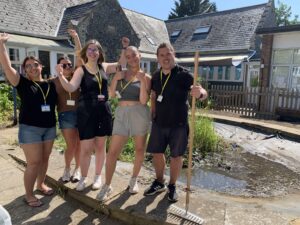
What that looked like on the ground was colleagues in Prague baking Easter pastries at a hospital. A team in Barcelona spending a day with homeless entrepreneurs, offering practical skills and support. Volunteers in Sharjah joining a national coastal clean-up. A group in Letterkenny bringing festive celebration to people living with disabilities. Twelve locations, twelve communities, one programme.
Nine out of ten SITA employees reported feeling more motivated as a result of volunteering. Participation exceeded first year targets, with over 4,400 hours delivered across the programme.
As Jo Creed, our Senior Client Manager who led the partnership, described it: “SITA had a strong desire to involve global teams and it was clear that Employee Volunteering could extend projects worldwide. Together, we launched a programme via a central hub accessible to all colleagues, making it easy to manage, deliver and report on the programme across the business.”
The ambition now is to build rising participation and employee engagement across SITA’s global workforce. We are genuinely excited to support that journey.
Five questions I would ask any global CSR leader
These are the questions I find myself returning to in every conversation about global volunteering. They tend to cut quickly to what is working and what is not.
Are your regional teams genuinely empowered to choose their own community partners? Or are they working from a centrally agreed list that may not reflect local need or culture?
Do your employees in each region understand what the volunteering programme stands for and why it matters? A clear global narrative, communicated consistently, is what local delivery builds on.
Is the programme genuinely accessible to employees in different roles, time zones and working patterns? Online volunteering and flexible formats matter as much globally as domestically, perhaps more so.
Can you evidence what the programme is delivering across all regions? Volunteer hours are a starting point. Named community partners and measurable local outcomes are what credible ESG reporting actually requires.
What does your programme look like from the community’s perspective? The test of a genuinely good global volunteering programme is not how it feels to the business, but what the communities it serves think of it.
Look beyond your desk this summer
July is a natural time to think about the world beyond your immediate surroundings. People are travelling, crossing borders, encountering places and communities that look quite different from their own. That curiosity and openness is exactly the spirit that makes corporate volunteering work when it is done well.
The best global volunteering programmes are built on the same instinct: genuine interest in the communities around you, wherever in the world your people happen to be working. A clear sense of purpose at the global level, genuine local relationships on the ground, and the systems to hold it all together reliably over time.
Whether you are a multinational looking to build a volunteering culture that genuinely connects your global workforce to local communities, or a business taking its first steps in this direction, the starting point is the same: find out what the communities around your offices actually need, and build from there.
Whether you are already working with us or just starting to think about what global volunteering could look like for your business, I would genuinely love to have that conversation.
FAQs
How do you build an employee volunteering programme that works across multiple countries?
The most effective approach separates the global framework from the local delivery. A multinational needs a consistent vision, governance structure and reporting framework, but employees engage most deeply when the causes they support feel connected to their own communities. That means giving regional teams genuine autonomy to choose local community partners, rather than prescribing activities from the centre. Employee Volunteering works with global businesses to design exactly this kind of programme, combining central infrastructure with local community relationships and facilitators in each region.
What is the biggest challenge in running global employee volunteering programmes?
The administrative complexity is significant: different languages, different community contexts, different risk frameworks and different reporting requirements across multiple countries. Without the right technology platform, that burden falls on already stretched CSR teams. A central volunteering hub that gives global visibility and reporting while allowing local flexibility is the practical solution, and it is also what allows a business to evidence its social impact globally in a way that satisfies ESG disclosure requirements.
How does skills-based volunteering work for international companies?
Skills-based volunteering allows employees to contribute professional expertise, in areas like technology, finance, communications or legal, to community organisations that genuinely need it. For global businesses, it is particularly valuable because employees in every region can contribute skills relevant to local grassroots organisations, which tends to create more lasting impact than generic activity. Employees also find considerably more meaning in contributing professional skills than in activities that bear no relation to their working lives.
How can employee volunteering support ESG reporting for multinational businesses?
A well-managed global volunteering programme provides the specific, evidenced data that ESG reporting requires: volunteer hours by region, named community partners, measurable local outcomes and employee engagement data. Employee Volunteering provides reporting infrastructure as part of every programme it manages, making it straightforward for CSR teams to evidence social impact across all regions without aggregating data from disconnected sources.